Lynette Ong recently released her new book, 'Outsourcing Repression: Everyday State Power in Contemporary China' (Oxford University Press, 2022). The culmination of over a decade of fieldwork and research, the book examines the ways in which the Chinese government enlists nonstate actors to enforce urbanization, using a range of low-level violent and nonviolent means.
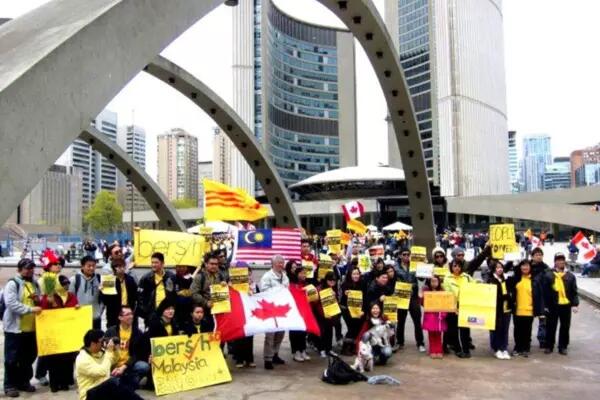
'Outsourcing Repression' is the third book for Ong, a professor of Political Science, jointly appointed to the Munk School’s Asian Institute. In February, she released 'The Street and The Ballot Box,' about Malaysia’s Bersih movement.
We spoke with Ong about the evolution of the Chinese government’s tactics, and what her research uncovered about the effect of the change of political power in China.


Outsourcing Repression, your new book, is the culmination of a decade of interviews and fieldwork, beginning in 2011. Was there a precise moment that sparked you to focus in on how Chinese authorities co-opt local influencers to clamp down on the public?
I started out in 2011 wanting to understand the political economy of urbanization in China, a continuation of themes from my last book. But, as I spent more time in the field talking to ordinary folks, I was drawn by the prevalence of these practices – almost everyone knew about it or had first-hand experience – and yet they were grossly understudied in scholarly literature. I felt compelled to dig deeper.
You characterize the forms of repression you outline in this book as “counterintuitive” – why?
The findings are counterintuitive because government repression, especially violent repression, usually invites backlash. However, by outsourcing violence to thugs and hoodlums, these non-state actors provide a veneer of deniability for the hiring authority and thus allow for evasion of accountability. It is important to note that the violence used is low-grade, often taking the form of cutting off residents’ utility supplies, intimidation, and beating.
Additionally, the state engages nonstate grassroots brokers who draw on their own social capital to mobilize the masses, maximizing policy compliance and making policy implementation seem like a nonstate effort. In sum, by outsourcing repression, the Chinese state is largely able to impose its will on society without inviting backlash or provoking resistance.
You state that "no country has ever pulled off the spatial transformation and relocation of people on the scale achieved by China while simultaneously maintaining social stability." Why is that?
The process of urbanization – of redistributing land use and relocating residents – is an inherently contentious process. Why would anyone want to give up their land voluntarily? Especially if they are poorly compensated?
Even if people receive good compensation, they may not want to part with their land for sentimental and other reasons. Thus, governments often encounter strong resistance in their attempts to grab land and redistribute it for other uses. We have seen this across developing countries from Asia, Latin America, and Africa, and even the US and Britain in the pre-industrial days.
The difference with China’s urbanization experience is much of it is “state-led”. Urbanization in China, including redistribution of land use, and movement of people from the farm to the cities, does not grow organically (except for migrant workers, many of whom do not acquire formal urban status). Rather, the Chinese state is actively involved in the process, spearheading it – and more astoundingly, the mass transformation has been achieved with no significant disruption to social stability.
In Outsourcing Repression, you note that the experiences of repression are different for citizens in metropolitan versus rural areas - rural residents experience more violent methods of repression. What factors enable this in the Chinese context?
Urban residents, and particularly those in metropolitan cities are well-educated, middle-class, and more aware of their rights. Access to technology and social media are also more prevalent in the cities than in rural areas. All these factors combined to constrain government behaviour in urban areas more than in rural areas. Therefore, violent repressive measures are less likely to take place in metropolitan cities.
How did your findings on the topic change after President Xi Xinping came to power?
The political environment in China became tenser after 2015-16, soon after Xi came to power, as the government increased repression and crackdowns on society. It became more challenging to conduct field research at every level. Media reporting also became increasingly censored and hence skewed. None of this is new in China, since it has always been an authoritarian country, but under Xi Jinping, there has been a structural shift in political repression, and things have gone from bad to worse.
You mention the ubiquity of the Chinese government’s strategy of mobilizing the masses in reference to COVID-19 patrols. How else did China’s response to COVID-19 change or reinforce your theory?
China is able to impose strict lockdowns and other COVID restrictions (rather effectively until recently) because the government has the capacity to mobilize society, much like the grassroots brokers I describe in the book, to conduct mass testing, enforce quarantine measures, and deliver essentials to the residents. All these are impossible to implement in Canada or other similar societies because the state lacks the capacity to mobilize society to the extent that the Chinese state can.
The book hinges on the idea that these violent strategies are deployed because they “provide the pretense for plausible deniability and the evasion of political accountability” - do you see any grassroots pushback against that in recent years? Any calls for accountability?
As I have shown in the second half of the book, violent repression is becoming increasingly less likely as time proceeds, as the development of society and technology serves to constrain government behavior. But, I have also argued that while nonviolent repression may receive less pushback, it may not necessarily be less coercive. Coercion may not take physical shape, is tacit, and works through communal relationships – all these characteristics make accountability tracing of nonviolent repression inherently challenging.